Death
Being and NothingnessDeath, in Sartre’s account, is not the final possibility toward which a person can freely project themself. It is an outside contingency that ends the living for-itself’s power of self-transformation, makes its past definitive, and leaves the meaning of its life to the Other. Its force lies in this reversal: death does not complete a person’s project from within but closes the project and exposes it to judgments the person can no longer contest.
The Past Made Definitive
While a person lives, they are their past without being reducible to it. The past is not merely a possession that can be discarded; the living person sustains and reassumes it, and can also project beyond it. Death changes that relation. The for-itself, which had been able to transcend its past toward a future, is made past in its entirety: it becomes an in-itself, fixed among the things of the world. Death adds its own occurrence to the totality of what has gone before, but cannot turn that final fact into a fresh opportunity for escape. Even a last-hour repentance is incorporated into the life it tries to disavow.
The difference between living and dead is therefore not simply that one has more experiences than the other. A living person’s meaning remains in suspense because they can criticize, alter, and surpass what they have been. Death arrests that capacity. The dead life may continue to undergo changes of interpretation, but it can no longer change itself or take responsibility for those changes. This is the sense in which death turns life into destiny: the life becomes a closed totality, while its meaning remains open to alteration from outside.
Why Death Is Not a Personal Possibility
A person may wait for a particular death, but death itself cannot be awaited as a determinate future achievement. Even death from old age cannot reliably arrive as the fitting end of a completed task. A person may die before accomplishing it or survive beyond it; chance determines whether an ending resembles a resolved chord. Such an ending may look harmonious without truly issuing from the life as its own completion. Death is consequently not one more possible project among others. It is the possible nihilation of all possibilities, and that possibility lies outside the projects it destroys.
Nor can suicide make death into a self-authored ending with a settled meaning. Suicide is an act within life and would require a future through which its significance could be confirmed or revised. As the last act, it is denied that future and remains undetermined; survival or a failed attempt could disclose other possible courses of action and change how the act is understood. A project aimed at a particular death can be intelligible, but a project toward death as the destruction of every project would undermine the very future on which meaning depends.
The Other’s Victory and the Meaning of a Life
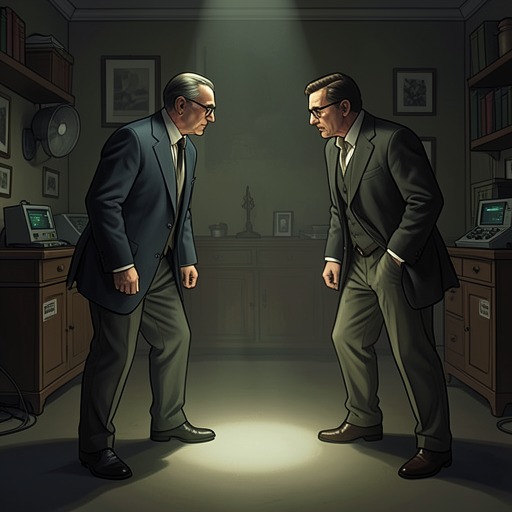
Death settles the contest between a person’s self-understanding and the meanings assigned to them by others, not by reconciling the two but by removing the living combatant. While alive, a person can answer an interpretation by projecting new ends: what they are for the Other need not exhaust what they make themselves. Death ends that ongoing reply. The person becomes, in Sartre’s phrase, a prey for the living, dependent on others for the continued interpretation of their deeds and victories.
The apostle of peace illustrates the consequence. While alive, the meaning of his enterprise could remain in his own hands; his promise that there would be no war while he remained could express the project through which he understood himself. Once he is dead, others can recast that undertaking as folly or insight, failure or success. The enterprise’s meaning is no longer his to determine. This is not merely the familiar objectification that a living person may resist: death transfers the contest to another level by suppressing the person who could answer back.
Contingency, Facticity, and Freedom
Against Heidegger’s account of being-toward-death, Sartre concludes that death is not the for-itself’s distinctive possibility. It is a contingent fact, comparable in its givenness to birth: it comes from outside and turns the person into an outside for others. Death can be disclosed to a person only through the existence of other people, for without the Other there would be no surviving standpoint from which the dead person’s life could appear as a meaningful destiny rather than the simultaneous disappearance of subject and world.
This does not mean that death is the inner source or measure of freedom. A person makes themself finite by choosing among possibilities and thereby making a life unique; even an immortal person could not recover an opportunity refused at its original moment. That irreversibility belongs to temporal freedom, not to mortality. Death is instead a factual limit of subjectivity and an unrealizable reverse side of projects: it is unavoidable as the point at which no possibilities remain, yet the living for-itself never encounters that limit as an achieved possibility of its own.
Death as an External Limit
Death therefore haunts every project without functioning as an obstacle that the project can directly meet and overcome. It is the future meaning of the person for the Other, the destiny of those projects elsewhere. The person can assume that limit as part of their situation, but cannot make death the end that reveals their being from within. Freedom remains total in the sense that it is not internally curtailed by a possibility of death; the limit is external, and the person’s eventual exposure to it is immediately alienating.
The account’s final distinction is consequently between choosing as a living person and being fixed as a dead one. Living freedom remains able to revise the past and project a future, while death stops that self-revision and gives the Other the lasting authority to interpret what has been. Death does not supply a final meaning from the inside. It ends the person’s power to make meaning and leaves the unfinished work of interpretation to the living.